Showing posts with label Plant reproduction. Show all posts

06 October 2022

B10.1-2. Asexual reproduction & Sexual reproduction in plants

(0654) Coordinated Science


Subheadings and key concepts covered

B10.1. Asexual & sexual reproduction: 

  • virus (binary fission), plants (runners, bulbs, tubers)
  • haploid cells, diploid cells, zygote
  • advantages and disadvantages of either mode of reproduction

B10.2. Sexual reproduction in plants

  • flower anatomy: sepal, petal, stamen, carpel
  • pollination: wind and insect-pollinated plants; their adaptations
  • fertilisation
  • investigating conditions for germination: water, oxygen, warmth


03 April 2014

12. Reproduction pdf


#125 Summary of Reproduction

Reproduction is the biological process by which new "offspring" individual organisms are produced from their "parents". It is a fundamental feature of all known life.
Two types of reproduction: sexual and asexual.

16 March 2014

#112 Growth and development

Growth - permanent increase in size and dry mass, by an increase in cell number or cell size or both.

Development - increase in complexity 


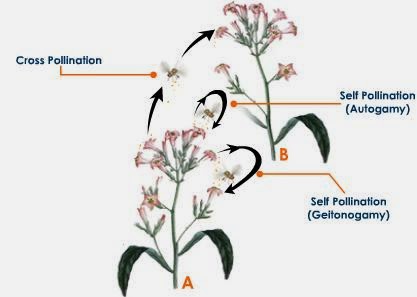
#111 Self-pollination and cross-pollination

Credit: TutorVista
Self-pollination - transfer of pollen from the anther to the stigma of the same flower, or to another flower of the same plant.
Cross-pollination - transfer of pollen from the anther of a flower to the stigma of a flower on a different plant of the same species.


15 March 2014

#110 Seed dispersal

Nutmeg is dispersed by birds.
Photo credit: r
ussolab.unl.edu
The flowers produce seeds which can be dispersed by the wind or other animals, providing a means of colonising new areas.


#109 Formation of seed, conditions affecting germination

The fertilised ovule divides by mitosis to form a seed containing the embryo plant and food stores called cotyledons.


#108 Structure and functions of a flower

You need to be able to describe the structure and functions of a named dicotyledonous (two seed leaves) flower.


#107 Reproduction in plants - agents of pollination

Reproduction in flowering plants may occur both sexually or asexually.

Pollination can take place with the help of agentswind or insects.